
Have you ever thought about starting an online shop? Certainly you've heard stores about people…

Five Ways To Leave Work At Work
How often do you find yourself thinking about work after work hours? If your answer is regularly, then letting go of work is a never-ending challenge.
You may be familiar with that uneasy feeling when something from work pops into your head, and you immediately stop what you’re doing to jot down a note. These unfinished work tasks—a known nemesis—often occur after hours and are shared by many hard-working people.
So How Do You Mentally Shut Work Off?
One way to leave work at work is to fill your day with small accomplishments so you feel productive when your day is complete. Don’t fall into the habit of focusing all your energy on just one task—this can leave you drained and stressed at the end of the day. Instead, divide your day by focusing on a few tasks, giving yourself a higher chance of completing those must-do items.
Then do this. Before you leave work, take a couple of minutes to write down your tasks for the next day. This will clear your mind of work items allowing you to enjoy your free time. Make this a habit, and those work reminders will become less intrusive outside of work hours.
Below are five more tips to help leave work at the office:
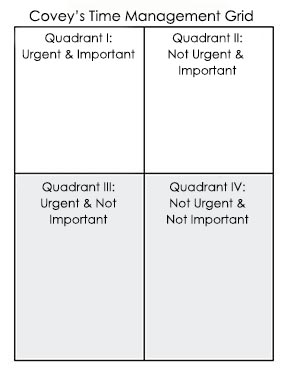 1) Quadrant Matrix. One of the best resources is Stephen Covey’s Time Management Matrix. You may know Stephen Covey from his book, The 7 Habits of Highly Effective People. Covey’s matrix is divided into four quadrants which list tasks in order of importance. By tracking and completing tasks, you set reasonable expectations for yourself and can easily measure your day’s progress. Tasks left unfinished are moved to the next day’s list. This allows you to feel more organized and in control while leaving those work priorities at your desk.
Tip: Be realistic when making your list. Shorter lists containing three or four items for the day are more achievable than lengthy ones. Start by managing your expectations, and you’ll feel more accomplished and in control of your day.
Tip: When making your list, take five minutes to estimate how long each task will take. By putting a time estimate on these tasks and adjusting accordingly you’ll quickly discover how accurate these estimates are. When you complete these tasks, cross them off and carry over any unfinished items to the next day’s list.
For more information visit Covey’s Matrix.
2) Find an Outlet. Everybody needs an outlet from the stresses of everyday life. Whether it’s a hobby, exercise, or meeting up with friends or family, find ways to decompress by scheduling these activities so you can fully step away from work.
3) Make Habits Routine. Whenever you try something new, sometimes it works and sometimes it doesn’t. Making an effort to repeat the same tasks consistently forms a habit. When your workday ends and you leave the office, make every effort to avoid reading email or making business phone calls after work—allowing you to reclaim your valuable time. When you leave work, listen for the “click” of the door shutting behind you. That sound signals it’s time to disconnect and return to work tomorrow.
4) Organize Your Space. Clutter and piles of paperwork only add to your stress when you leave at the end of the day. Take the time to tidy up during the last 15 minutes before you leave work. This simple habit allows you to leave feeling relaxed and better prepared for tomorrow.
5) Cut Back On Overtime. Eliminate any distractions that keep you from completing your tasks during the day, and make the necessary changes to improve efficiency. Some of the biggest obstacles to productivity are long meetings and unnecessary social interactions. Be clear about setting and meeting deadlines with a team or yourself. When distractions arise, give yourself a reasonable amount of time to address urgent matters, and place non-urgent ones back on your list.
Keeping Work At The Office
Work reminders pop into our heads when we feel disorganized and unproductive. By taking the time to work through your list of projects, you’ll find completing tasks becomes more efficient. You’ll also feel more organized when information and projects can be easily located. When you implement these tips as suggested above, you’ll feel more productive and mentally focused—making it easier to “shut off” that switch in your head that constantly reminds you of work.
Bonus Tip
Color Your Calendar
Use a digital or paper calendar (or both) to aid you in juggling your work tasks and free time. For example, use color-coding to label family, work, and recreational activities. At a glance, you’ll see both personal and work commitments and know when it’s time to rebalance—helping you maintain a healthier connection between work and home life.
Related Posts



Comments (0)